AI Brain Design: Parabrain
Tools: Parabrain, InWorld, Figma
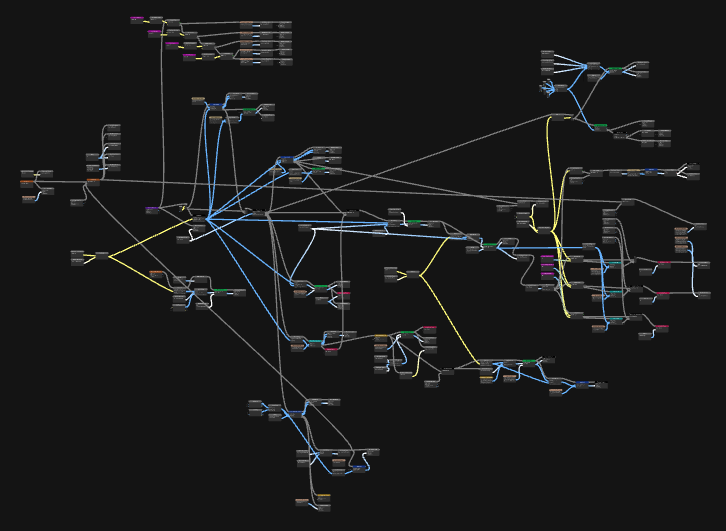
During my time at Liquid City, I established myself as a brain architect for our AI agents. Our early work utilized InWorld, a platform for designing NPC characters and agents for games. While InWorld offered an accessible entry point, its integration limitations led us to develop our own AI Agent Brain engine called "Parabrain" - a node-based graph system for orchestrating LLMs within larger systematic flows (created by the brilliant Lachlan Sleight).
As one of Parabrain's first users, I helped shape the platform by building agent brains and providing feedback to our developers on needed features and improvements. This tool effectively bridged the gap between initial FigJam system flows and the actual experience of conversing with an agent.
The iterative process was intense: each character required extensive prompt engineering and testing different LLMs (Gemini vs ChatGPT) for specific tasks. I discovered that a single misplaced word could break an entire character's personality, requiring dozens of iterations to achieve authentic, consistent voices.
My process typically begins in Figma, mapping out all available components. For Project [Confidential], I set out to create an interviewer agent that could help people uncover and articulate meaningful life stories. I started with hands-on interview research, conducting sessions with team members to understand the dynamics.
This allowed me to identify four core phases of natural story-finding conversations, which I then developed into a detailed closed-loop systems flow. Working closely with colleagues, we translated this flow chart into Parabrain nodes.
Other projects included local agents, which would use location data and knowledge to guide a user around a place, and game characters. Each of these use cases required slightly different approaches. Check out Wisp World and Belfast [coming soon] projects for a more detailed explanation!
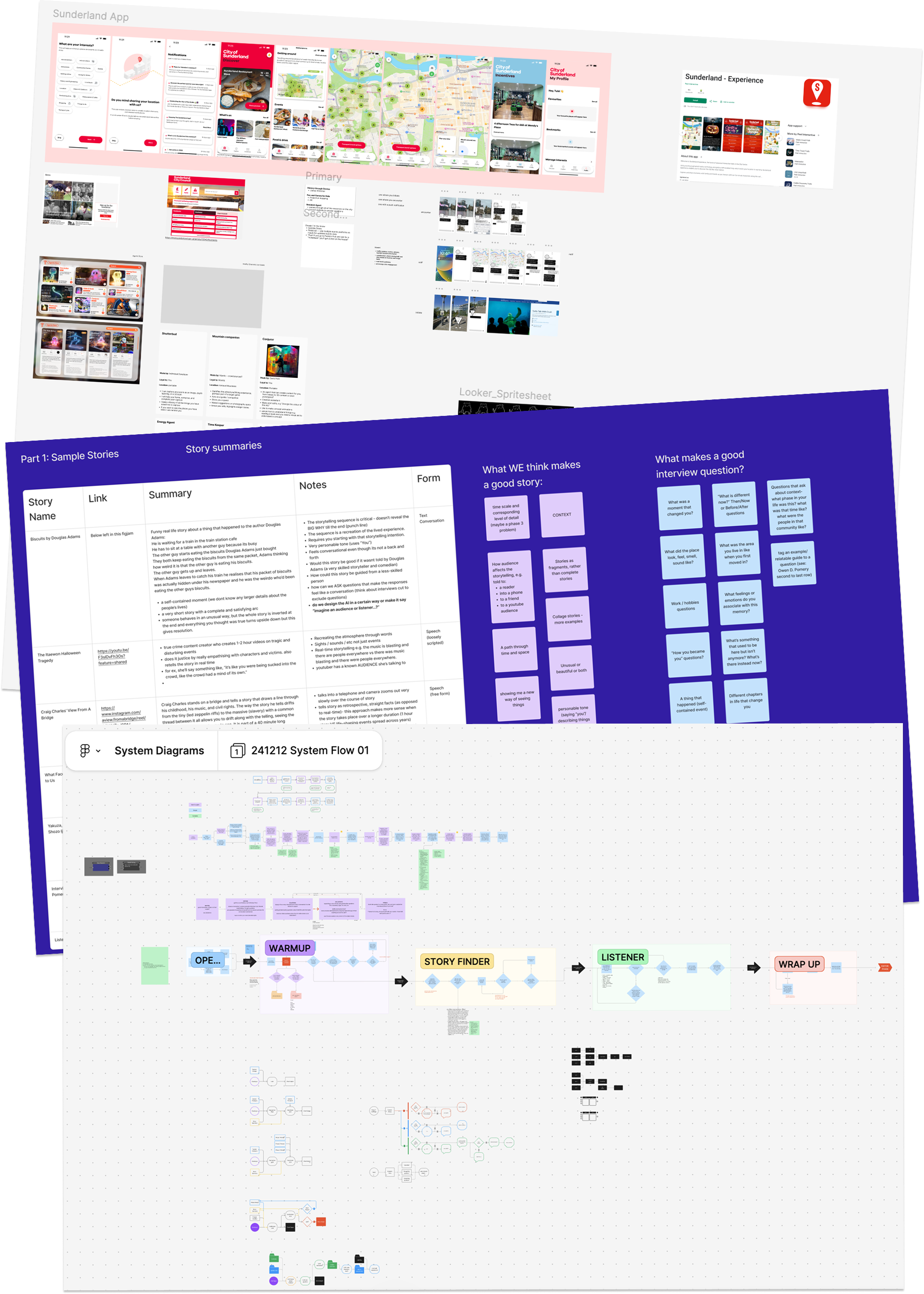
The final stage involves careful prompt editing and branch refinement, iterating until we achieve the desired interaction. I've developed a strong intuition for AI communication - knowing how to phrase prompts to achieve specific outcomes. This balance between prompt crafting and system architecture remains a fascinating area of experimentation, with each project presenting unique challenges and learning opportunities.
Impact: Successfully architected AI personalities for multiple high-profile client projects, with my brain designs powering conversational experiences that felt natural and engaging rather than obviously scripted.